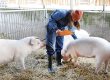
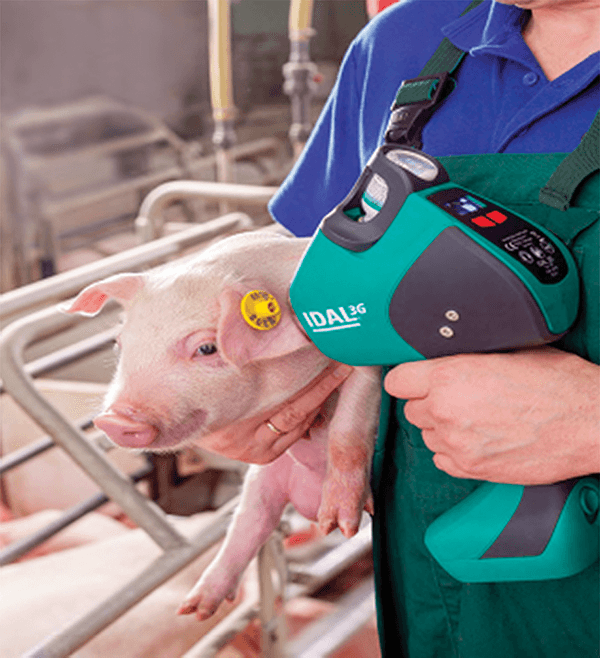
ABOVE: Needle-free intradermal vaccination offers a practical alternative, providing protection with fewer side effects, less pain and stress and reduced risk.
NEEDLESTICK injuries remain a real risk on pig farms, particularly during routine vaccination when pigs move unexpectedly and staff are working under pressure. For producers, this is more than a safety issue. It is a management issue.
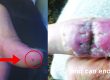
Vaccination remains central to herd health and, while traditional intramuscular injection is effective, it also comes with drawbacks, including tissue damage, the risk of broken needles, sharps disposal, operator injury and the potential transfer of pathogens between pigs through reused needles.
Needle-free intradermal vaccination offers a practical alternative. It delivers vaccine just into the layers of the skin using controlled pressure. The layers of the skin are designed to detect and respond to disease threats quickly, helping the vaccine do its job effectively, even with a small dose.
Research and commercial on-farm use have shown that intradermal needle-free vaccination provides protection at least as good as intramuscular vaccination, with fewer whole-body side effects, less pain and stress, reduced risk of self-injection and no risk of needle fragments remaining in the meat.
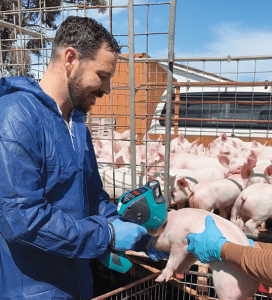
For pig handlers, the benefits are just as important – needle-free vaccination removes the risk of needlestick injuries, reduces sharps handling and can simplify the vaccination routine. For pigs, it means less pain, less stress and less tissue trauma at the injection site.
As pig production continues to focus on welfare, safety and efficiency, needle-free intradermal vaccination is increasingly difficult to ignore. For many producers, it is not a future concept. It is a practical tool already available to support modern pig health management.
References are available on request – contact MSD Animal Health on customerservice.ahau@msd.com or 1800 033 461.
MSD Animal Health