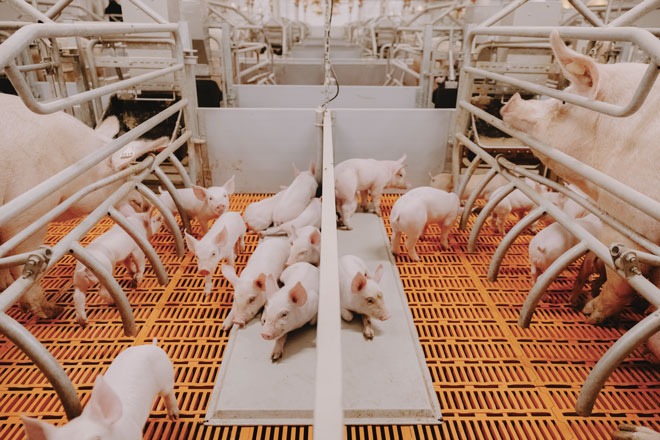
AUSTRALIAN Pork Limited, in partnership with Ashley Norval from Norval Agriconsulting, has launched the farrowing house series, showcasing farms that have transitioned from conventional farrowing crates to non and reduced-confinement farrowing systems.
Over the past weeks, the APL Update has featured case studies from Denmark and Australia, highlighting pen design, sow and piglet management, staff training and practical on-farm insights. The series aims to support producers in exploring alternative approaches to traditional farrowing systems, while sharing real-world experiences and lessons learned.
The series began with Tvilumgaard Farm, a 580-sow farrow-to-finish operation using reduced-confinement pens. Despite the relatively recent transition, owners Thomas and Susanne Kuhr have achieved a 7 percent piglet mortality rate. Their experience demonstrates how adapting management practices and system design can deliver strong outcomes.
The second case study featured was Norregaard, a 750-sow farm operating a fully non-confinement system. Owned by Ole and Sanne Mathiasen, the farm supplies the Antonius brand of Danish Crown and meets strict production standards, including 30-day weaning, intact tails and zero sow confinement from farrowing through lactation.
Next, Frenderupgaard – a 1400-sow operation owned by Niels Aagaard Jorgensen and his wife Mia – showcased their journey in trialling three reduced-confinement pen designs before selecting their preferred option. A key focus of their success has been building staff confidence across a diverse workforce working with loose-housed sows.
At Krannestrup, father and son team Niels Aage Arve and Kristian manage 1350 sows in reduced-confinement pens. Farm manager Rene Dejgaard Thomsen shared the practical challenges of transitioning systems. The case study highlighted how the team adapted to day-to-day changes and what measures proved most effective in supporting staff and sow management during the transition.
The Australian perspective was provided through the SunPork maternity ring system, which is set to be rolled out across SunPork sites nationally. SunPork science, technology and adoption manager Dr Kate Plush emphasised the importance of firsthand experience with the system, encouraging producers to spend time working within the system with an open mind. The case study demonstrated how staff confidence develops through exposure, training and gradual adaptation.
The final instalment of the series brought together key take-home messages across all five farms. A consistent theme was that transitioning to non or reduced-confinement systems takes time.
While piglet mortality may increase initially, performance improves as staff gain experience and refine management practices. Over time, farms reported positive outcomes, including improved piglet health and improved sow milk production.
Resources, including detailed case studies and the final report, are available on the APL website.
Note, APL continues to support traditional farrowing systems while recognising and supporting research into alternative systems, balancing the health and welfare of sow, piglets and the people caring for them.
Research is part of our commitment to demonstrating science-led animal welfare, which underpins our commitment to continual improvement in the care of our pigs and our people.
Australian Pork Limited