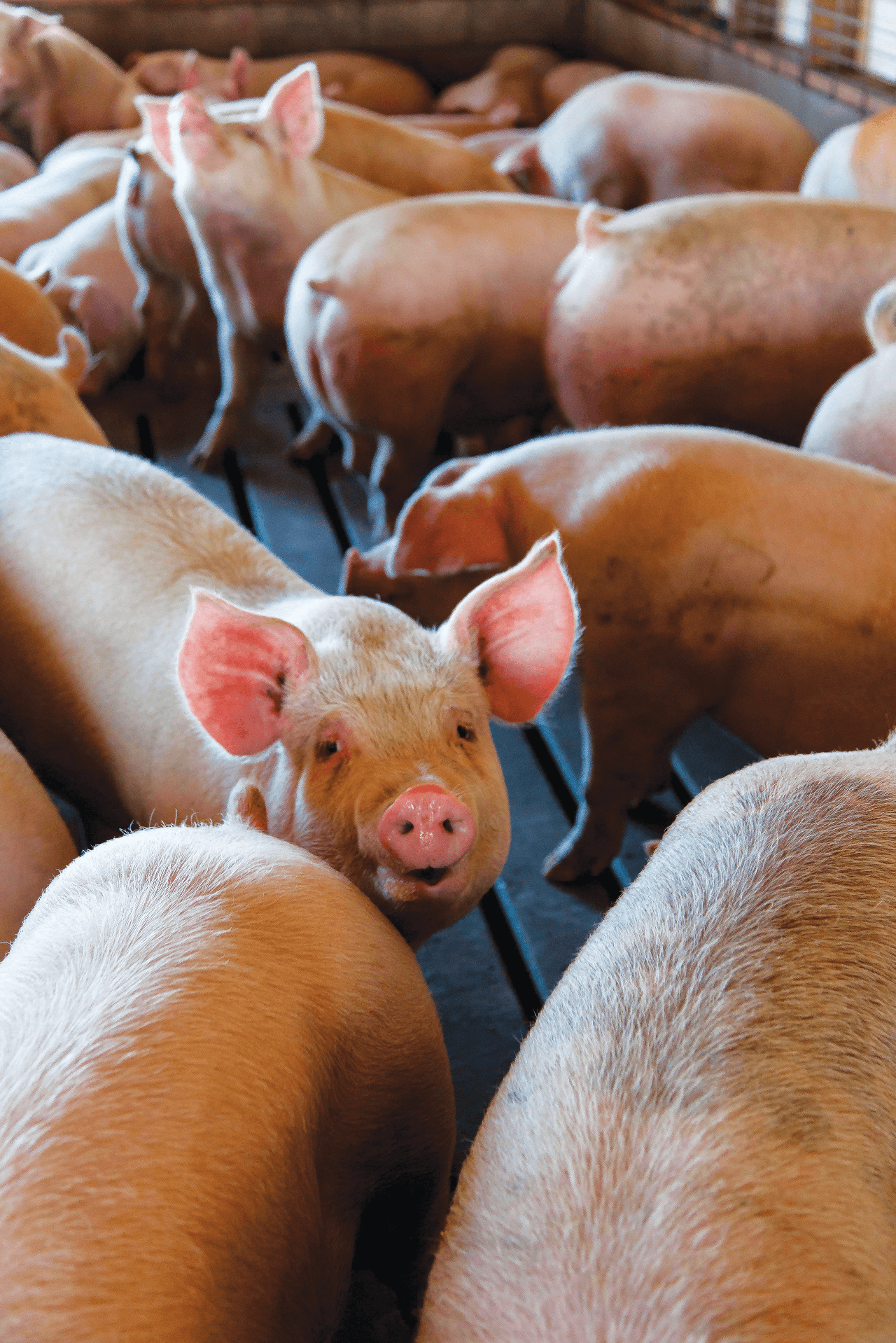
ABOVE: The weaning transition is a critical stage in a pig’s life.
NEW research shows how weaning management can improve lifetime performance. An Australian Pork Limited-funded project led by JBS Pork has delivered new insights into how early-life management decisions can improve pig performance, feed efficiency and profitability across Australian pork production systems.
The project combined the analysis of more than 130,000 commercial pig records with targeted research trials to identify the factors that have the greatest impact on pig performance after weaning. The findings confirmed that the weaning transition is a critical stage in a pig’s life and that management decisions made before and during weaning can have lasting effects through to sale.
Three key factors stood out. First, older weaning age consistently improved post-weaning survival and lifetime growth performance. Pigs weaned at older ages were better able to cope with the nutritional, social and environmental challenges associated with weaning.
Second, fostering practices mattered. Pigs that were not fostered generally performed better than fostered pigs, while pigs fostered after the first day of life showed the poorest outcomes. Where fostering is necessary, completing it within the first 24 hours appeared to minimise negative impacts.
Third, and perhaps most importantly, the project showed that a tighter weaning age spread can deliver significant benefits. Pigs grouped within a narrow age range – ideally within three days and no more than seven days where the production system allows – had improved growth, feed intake, feed efficiency, size uniformity and in some cases heavier carcass weights at slaughter.
The research suggests that reducing the mixing of pigs at very different developmental stages can help support a smoother transition after weaning. For producers, the key takeaway is that improving performance does not always require costly interventions.
Practical management changes such as increasing average weaning age, minimising late fostering and reducing weaning age spread offer realistic opportunities to improve pig robustness, production efficiency and lifetime performance.
While the economics will vary between farms – particularly depending on labour and infrastructure constraints – tighter weaning management has the potential to deliver measurable returns and contribute to lower cost of production across the industry.
The final report is available on the APL website.
Australian Pork Limited