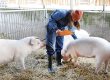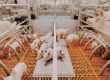
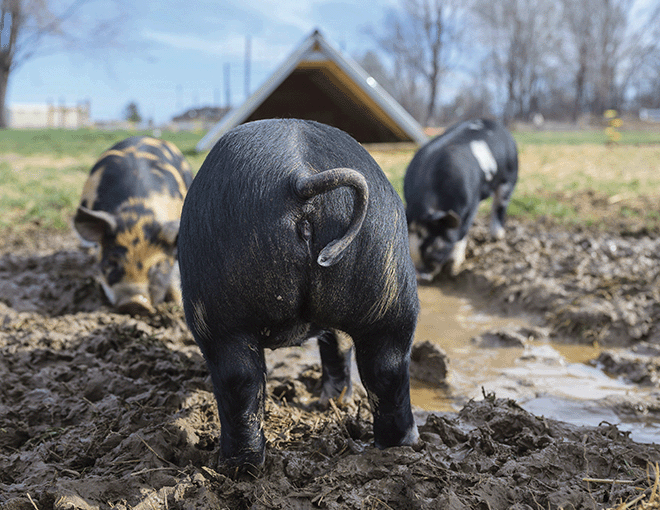
ABOVE: Piggery effluent can contain a range of disease-causing bacteria, including e coli and APP.
A NEW project recently completed by Australian Pork Limited in partnership with the University of Queensland has identified a faster way to detect specific bacteria rapidly in the field, saving producers from needing to send samples away to a lab and wait days for results. The project – which was inspired by the use of wastewater surveillance during the COVID-19 pandemic as a routine means to monitor disease and track how widely the virus spread within communities – tested whether common disease-causing pig pathogens could be detected in effluent using modern DNA-based methods.
Piggery effluent can contain a range of disease-causing bacteria, including enteric and respiratory bugs such as escherichia coli (or e coli) and actinobacillus pleuropneumoniae (or APP). Being able to test effluent quickly on farm allows producers to spot disease risk earlier and support faster responses, improving outbreak control, reducing production losses and protecting pig welfare.
The project confirmed that several pathogens could be reliably detected in effluent using a rapid testing method known as loop-mediated isothermal amplification. The first step was to ensure that campylobacter coli – a common bacterium in pig populations – could be reliably detected using this method. Then effluent samples were spiked with APP – the bacterium responsible for porcine pleuropneumonia, a serious and devastating respiratory disease – which after a few tweaks was also successfully detected at low inclusion levels using this method.
The final stages of this focused on developing simple on-farm diagnostics using LAMP technology. Unlike PCR, which requires specialised lab equipment, LAMP runs at a single temperature and can produce results visible to the naked eye through a colour change within only 35 minutes. By refining an existing LAMP assay for APP, the team developed a highly reliable assay capable of detecting low levels of the bacterium and showed high accuracy in distinguishing positive and negative samples. A second LAMP assay was then developed for e coli – a major cause of enteric disease on farm.
Both tests performed at levels comparable to sophisticated lab methods but with a fraction of the equipment and time required. These findings suggest piggery effluent could become a powerful monitoring tool for producers, offering real-time insights into herd health without the need to sample individual animals. This approach also has exciting potential to be expanded to other bacterial pathogens and support future LAMP assay development.
According to the APL Project 2021-0013 team: “If we want to reduce antibiotic use, we need to bring the tools and the knowledge to the farm so that the producer and veterinarian can make informed decisions in real time, rather than waiting for an outbreak and then reacting to it.”
For more information about this project, contact APL’s risk inventory and evaluation program manager farming and welfare Dr Rebecca Athorn on rebecca.athorn@australianpork.com.au
Australian Pork Limited